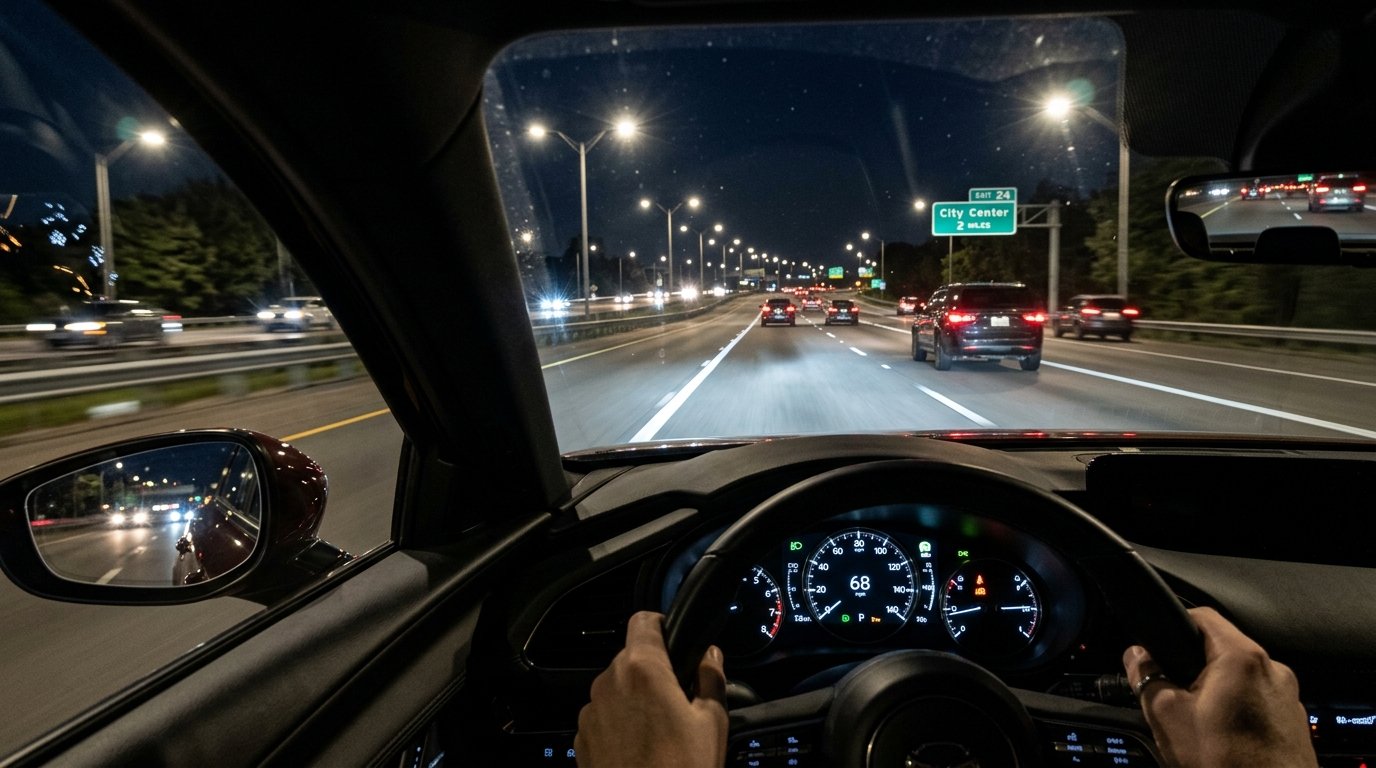
Night driving accounts for only a fraction of total travel time, yet a disproportionate number of severe accidents occur after sunset. Reduced contrast, blurred peripheral vision, and high-beam glare from oncoming traffic require heightened vigilance.
High Beam vs Low Beam Etiquette
- **Low Beams**: Use in well-lit urban areas, city roads, and whenever following another vehicle within 150 meters.
- **High Beams**: Reserved strictly for unlit rural highways with no oncoming traffic. The moment an oncoming car appears, dim your lights immediately to avoid blinding them.
How to Deal with Blinding Oncoming Glare
If an oncoming vehicle refuses to dim their high beams:
1. Do not retaliate by turning on your high beams — two blinded drivers heading toward each other is a catastrophe.
2. Shift your gaze downward and slightly toward the left curb/edge line. Use the road markings to guide your trajectory while maintaining awareness with peripheral vision.
3. Flip your rearview mirror’s anti-glare day/night lever or verify your auto-dimming mirror is active.
Keep Your Windshield Spotless Inside & Out
Microscopic dirt and oily film on the interior of the windshield cause severe starbursts and scattering of streetlights. Clean both the inside and outside glass regularly with microfiber cloth.
At Matha Driving School, night training modules are integrated into our advanced and refresher courses so students gain practical confidence under instructor supervision.
Matha Driving Academy Professional Advice
Mastering road safety comes from consistent, deliberate repetition under qualified mentorship. Never hesitate to ask your instructor to repeat a maneuver until you feel 100% confident.